
When people think about construction, they often focus on what they can see once a project is complete. Smooth roads, stable foundations, and durable infrastructure tend to receive the most attention. What many people overlook is the importance of the materials beneath the surface. In reality, some of the most important decisions in construction happen long before the first layer of pavement is placed or the first section of concrete is poured.
One of the most important factors affecting long-term performance is aggregate selection. Sand, gravel, crushed stone, and other aggregate materials create the foundation that supports roads, highways, commercial developments, and public infrastructure. Without properly selected and installed aggregates, even the most carefully designed projects can experience premature deterioration.
At RedStone Construction, we understand that structural integrity begins at the ground level. Our work spans asphalt paving, commercial base work, concrete, earthwork, underground utilities, erosion control, milling, parking lot maintenance, transportation, and turnkey site work throughout Arkansas. Because so many of these services depend on the conditions beneath the surface, quality aggregates remain one of the most important components of every successful build.
What Are Construction Aggregates?
Aggregates are granular materials used throughout the construction industry to provide stability, improve drainage, and support structures. These materials typically include crushed stone, sand and gravel, recycled materials, and specialized blends designed for specific applications.
While aggregates may seem like a simple construction material, they perform several important functions. They help distribute weight, improve load-bearing capacity, reduce movement beneath paved surfaces, and create a stable platform for concrete and asphalt.
The properties of an aggregate material also matter. Factors such as size, gradation, durability, particle shape, and permeability can affect how an aggregate layer performs under construction and traffic loads.
Without properly selected aggregates, construction projects can become more vulnerable to issues that affect structural integrity.
Why Structural Integrity Starts Below the Surface
Structural integrity refers to a structure’s ability to withstand the forces placed upon it without experiencing significant deterioration or failure. In road construction, structural integrity depends heavily on the materials beneath the pavement.
A pavement system can include the surface layer, base, subbase, and underlying subgrade. The base and subbase provide important support and can also contribute to drainage and the overall stability of the pavement structure.
When the ground beneath a roadway lacks adequate support, the entire structure can become compromised. Cracks begin to form, surfaces become uneven, and repairs can become more frequent and more expensive.
Quality aggregate materials create a stable foundation that helps distribute loads across the pavement structure. This is particularly important for highways and heavily traveled roads that experience thousands of vehicles every day.
At RedStone Construction, our teams consider factors such as soil conditions, traffic demands, drainage requirements, and environmental conditions when determining which materials will best support a particular project.
What Types of Arkansas Projects Does RedStone Work On?
Aggregate and base materials are not selected the same way for every construction project. A highway, airport runway, commercial development, parking lot, and municipal infrastructure project can each have different requirements for grading, drainage, stabilization, and pavement support.
RedStone Construction works on a wide range of projects throughout Arkansas, including commercial, municipal, residential, airport, highway, and infrastructure work.
Our capabilities include:
- Asphalt: Paving, patching, overlays, repairs, seal coating, crack sealing, hot and cold mix, and ultra-thin paving.
- Base: Surveying, grading, soil stabilization, and gravel base furnishing and installation.
- Concrete: Sidewalks, curbs and gutters, driveways, paving, aprons, box culverts, storm drains, pipe, structural concrete, building slabs, joint sealing, spall repair, and patching.
- Earthwork: Site preparation, subdivisions, commercial properties, and government contracts.
- Milling: Milling services for projects requiring pavement removal and preparation.
- Parking Lot Maintenance: Seal coating, overlays, patching, striping, joint sealing, and crack sealing.
- Recycled Asphalt: Recycled products for construction and paving applications.
- Underground Utilities: Water, electrical, storm drain, and sanitary sewage installation.
- Transportation: An in-house fleet of dump trucks and trailers to support material transportation.
- Erosion Control: Site-specific erosion control work performed by experienced crews.
- Turnkey Site Work: Earthwork, underground utility placement, foundation pours, parking lot layouts, and other construction phases managed through one contractor.
RedStone provides site preparation and construction services throughout Arkansas, including Little Rock, North Little Rock, Jacksonville, Maumelle, Conway, Benton, Bryant, Morrilton, Russellville, Fort Smith, Springdale, Jonesboro, Hot Springs, Texarkana, Pine Bluff, Rogers, Bentonville, and Cabot.
This range of services allows RedStone to approach a project as an interconnected system rather than treating the pavement, base, drainage, utilities, and surrounding site as separate components.
The Relationship Between Sand, Gravel, and Concrete
Construction projects rarely rely on a single material. Instead, multiple components work together to create a durable and reliable structure.
Sand and gravel play an essential role in concrete production by providing volume and contributing to the performance of the finished concrete. Cement acts as the binding material, while aggregates make up a significant portion of the concrete mixture.
Cement alone cannot create a roadway, bridge, or foundation. Aggregates must be incorporated into concrete mixtures to achieve the properties required for the intended application.
RedStone’s concrete crews use both standard and custom concrete mixes depending on the needs of the project. The company also uses slip-form and roller-screed equipment for high-production applications while maintaining a focus on the quality of the finished product.
This relationship between materials demonstrates why aggregate selection is so important. Even high-quality cement cannot compensate for poorly chosen aggregate materials or improper installation.
Why the Right Aggregate Base Matters
Every paved surface depends on a properly designed and constructed base or foundation.
An aggregate base can accomplish several objectives. It helps transfer and distribute loads, supports pavement layers, minimizes settlement, and can contribute to drainage. These functions may not be visible after a project is completed, but they significantly influence long-term performance.
Many property owners searching for gravel near me may not realize that not all gravel products are interchangeable. Different projects require different aggregate sizes, compositions, gradations, and compaction methods.
For example, a commercial parking lot may require different materials than a major highway construction project. The aggregate requirements for a residential development will likely differ from those used for municipal infrastructure or an airport runway.
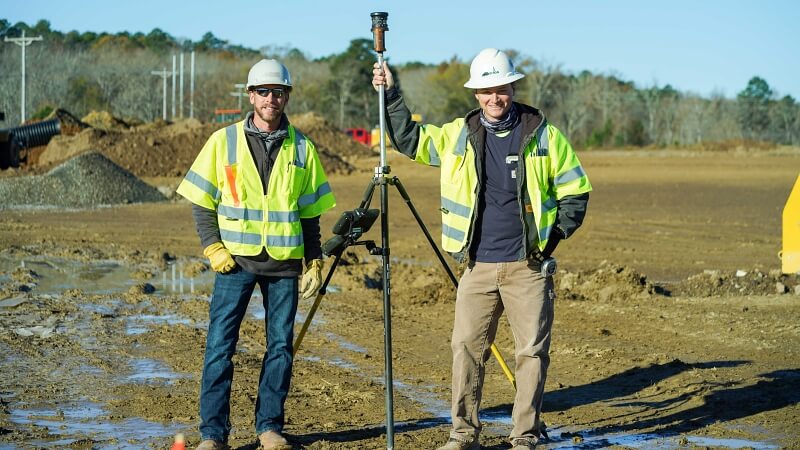
At RedStone, base work includes surveying, grading, soil stabilization, and furnishing and installing gravel base. The company’s crews also use GPS systems in their graders to help complete grading work according to project specifications.
RedStone owns two rock quarries that supply aggregate materials for its projects and maintains an in-house fleet of 50 dump trucks to help transport materials where they are needed. This allows the company to maintain greater control over material availability and scheduling from the beginning of a project.
A strong foundation and properly installed aggregate base can help increase the service life of a building, parking lot, or road while supporting proper water drainage.
How Site Preparation Supports Long-Term Performance
Before asphalt or concrete can provide a durable finished surface, the site itself needs to be properly prepared.
Site preparation can involve surveying, earthwork, grading, soil stabilization, drainage, underground utilities, and aggregate base installation. Each step contributes to the conditions that the final pavement or structure will depend on.
RedStone specializes in site preparation for new construction and expansion projects, including subdivisions, commercial properties, and government contracts. Its turnkey site work capabilities can include everything from earthwork and underground utility placement to foundation pours and parking lot layouts.
This approach helps address the underlying conditions of a project before the final surface is installed.
A well-prepared site provides the supportive infrastructure needed for the construction phases that follow, helping create a stronger foundation for asphalt, concrete, buildings, parking areas, and other improvements.
Drainage and Aggregate Performance
Water is one of the biggest threats to pavement and infrastructure.
When water becomes trapped beneath roads or paved surfaces, it can weaken supporting soils, contribute to erosion, and reduce the stability of pavement layers. Properly designed drainage and aggregate systems help move water away from critical structural components.
Properly designed aggregate systems can help control moisture and maintain the performance of the pavement structure over time. Aggregate gradation and permeability are important considerations when drainage is part of the pavement design.
This becomes especially important in Arkansas, where changing weather conditions can place additional stress on roadways and infrastructure.
RedStone’s site preparation and construction services include drainage-related work such as storm drains, underground utilities, and concrete infrastructure. By considering drainage as part of the overall site and pavement system, contractors can address one of the factors that can contribute to long-term deterioration.
Quality Materials Lead to Long-Term Results
The difference between a road that lasts for decades and one that requires constant maintenance often comes down to what lies beneath the surface.
Quality aggregates contribute to stronger foundations and help maintain structural integrity over time. They help protect investments by supporting the pavement structure and reducing the conditions that can contribute to premature deterioration.
RedStone has provided asphalt and paving services in Arkansas for five decades. The company operates three asphalt plants, two rock quarries, and a sand plant, giving its team greater control over materials and scheduling from the beginning of a project.
That experience extends beyond asphalt. RedStone’s crews provide base work, concrete, earthwork, underground utilities, erosion control, milling, parking lot maintenance, transportation, and turnkey site work. This combination of services allows RedStone to support multiple stages of a construction project rather than focusing only on the finished pavement.
At RedStone Construction, we believe that every successful project begins with a commitment to quality materials and proven construction practices. Our experience across Arkansas allows us to select the right materials for every application while maintaining the high standards our clients expect.
Whether the project involves highways, airports, commercial developments, municipal infrastructure, or site preparation, building with structural integrity in mind creates results that stand the test of time.
Ready to start your next construction project? Contact RedStone Construction today to learn how our experienced team delivers dependable infrastructure solutions throughout Arkansas.